Syrian Refugees in Turkey: Life, Location and Legal Status (2026)
Turkey still hosts more Syrian refugees than any other country. As of June 2026, 2,255,031 Syrians lived in Turkey under…

UNHCR puts registered Syrian refugees under temporary protection at close to 3.2 million, plus around 222,000 refugees and asylum-seekers of other nationalities (Source: UNHCR Turkey, 2026)
Other tallies, which separate out residence-permit holders and Turkish citizens of Syrian origin, put the temporary-protection figure closer to 2.25 million (Source: Wikipedia, citing Turkish government/UNHCR data, 2 July 2026)
Since the fall of the Assad government in December 2024, an estimated 640,000 Syrians have returned home from Turkey — the largest share of the 1.6 million-plus regional returns recorded so far (Source: Enab Baladi, reporting Turkish Interior Ministry & UNHCR data, May 2026)
Most Syrians in Turkey aren't classified as refugees under Turkish law in the strict legal sense — they hold Temporary Protection Status (TPS), established under a regulation adopted in October 2014, following Turkey's first asylum law (the Law on Foreigners and International Protection, in force since April 2014).
TPS gives access to healthcare, education, and (with a permit) formal employment, but it isn't the same as permanent refugee status or a path to citizenship. Non-Syrian asylum-seekers go through a separate international protection process, overseen by Turkey's Presidency of Migration Management.
In practice, this status shapes almost everything else on this page — where people can legally work, which province they're registered in, and what happens if they want to return to Syria.
Temporary protection status gives Syrian refugees the right to access Turkish public schools and healthcare, and to apply for a work permit tied to their province of registration.
In practice, most working-age refugees work informally, often in textiles, construction, or agriculture, because the formal work-permit process is slow and employer-dependent.
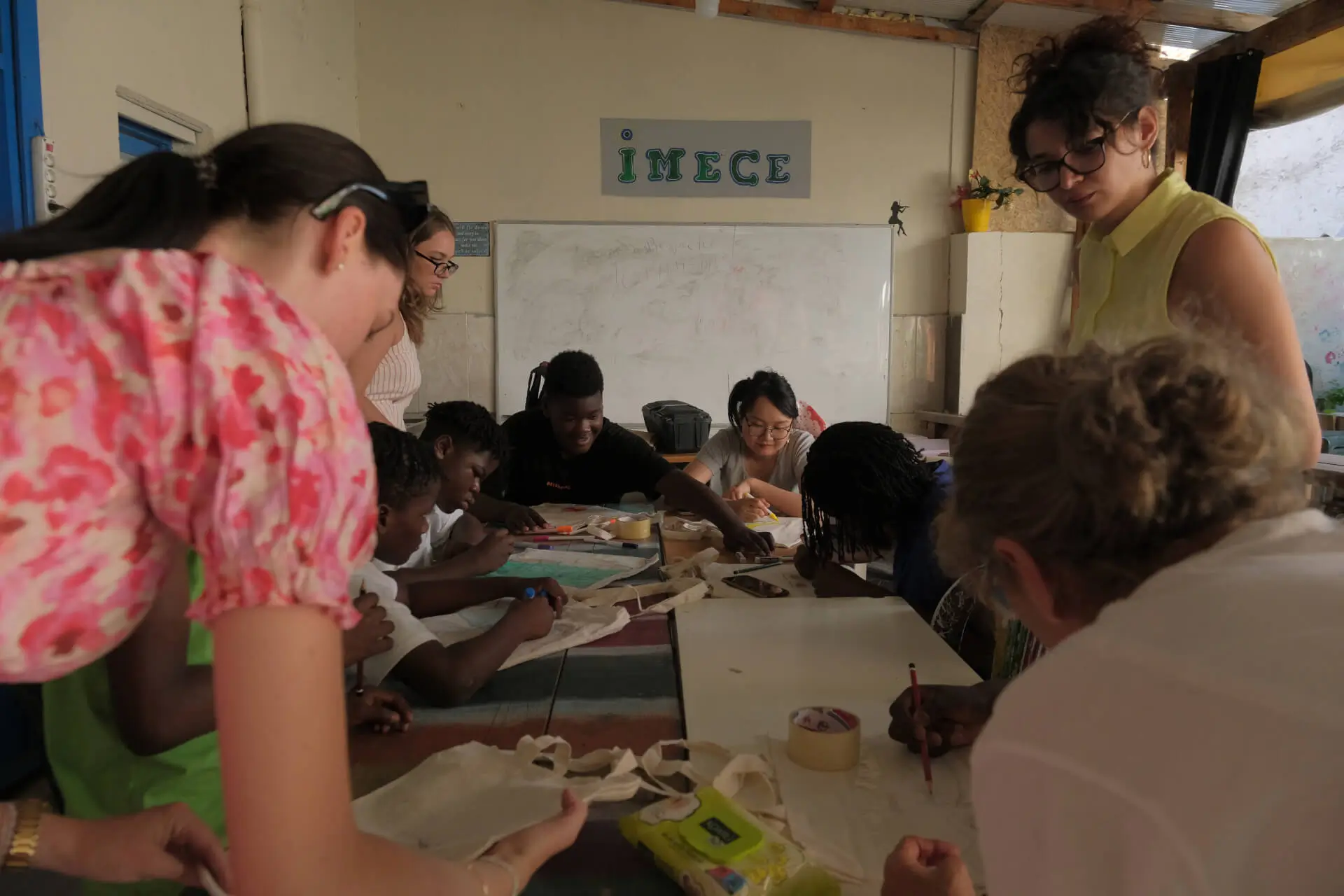
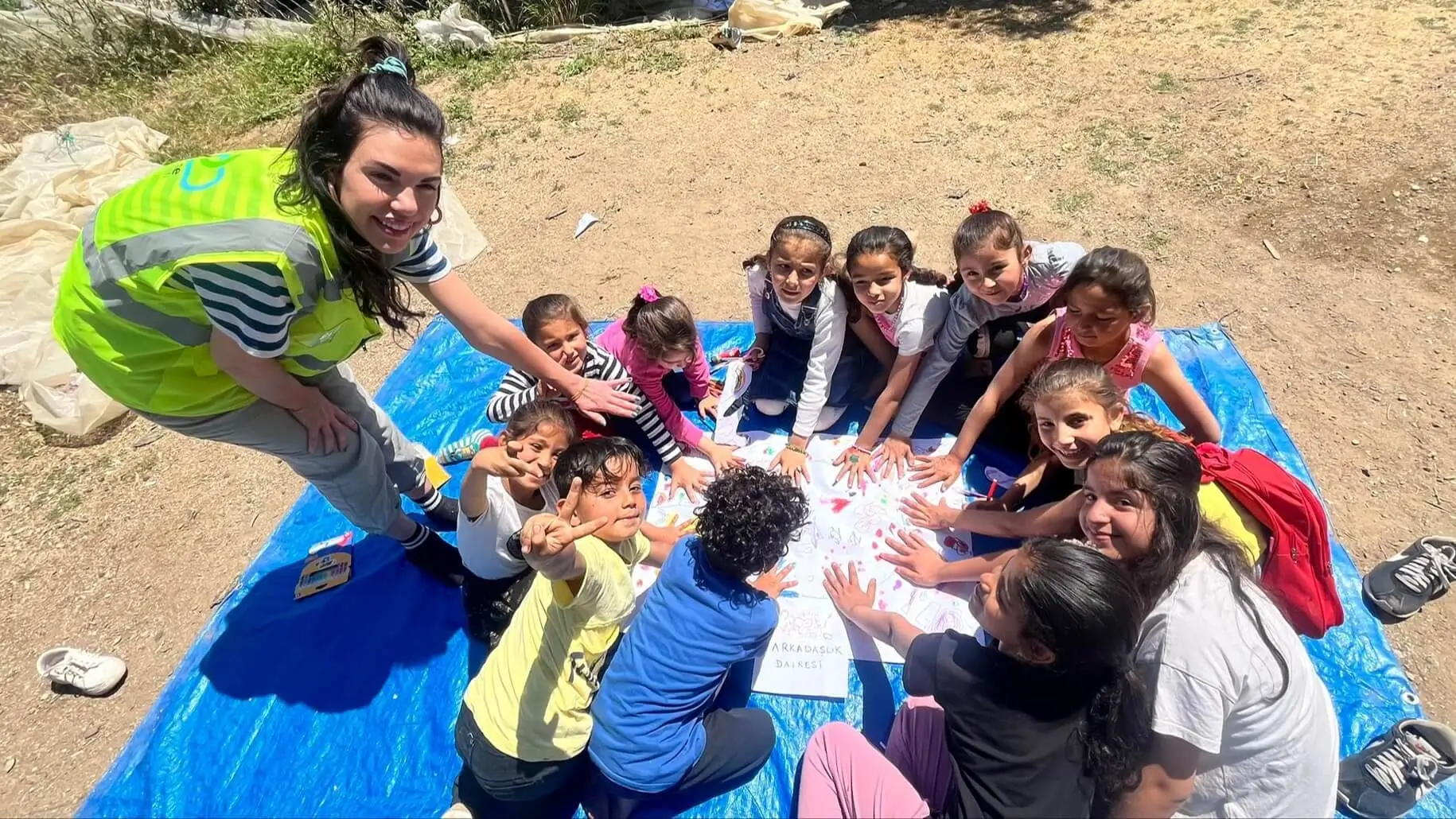
Imece's own Back to School programme has enrolled 400 children to date, and 200 women have completed vocational training through the Solar Age project.
At the height of the crisis, Turkey operated more than 20 official camps (temporary accommodation centers) along the Syrian border; most have since closed as residents moved into cities or returned to Syria.
Separately, informal, unofficial settlements — tent structures with little to no electricity, running water, or sanitation — persist in and around cities like Izmir.
Imece has distributed emergency aid to families in these unofficial settlements since 2015, including in Torbalı, and extended its emergency response to earthquake-affected regions following the February 2023 earthquakes.
Refugee women in Turkey face particular barriers to formal employment, often balancing childcare with informal or seasonal work, and are frequently excluded from vocational training pathways designed with male labor markets in mind.
Imece's own Solar Age Project addresses this directly: refugee women, known within the programme as "Solar Ladies," learn solar engineering and panel assembly, taught by Turkish staff trained at India's Barefoot College.
The project won a 2021 COP26 Gender Just Climate Solutions Award and was a 2022 WEDO Gender Just Climate Solutions Scale Fund awardee.
Since December 2024, hundreds of thousands of Syrians have returned from Turkey — but return isn't the end of the story. Returnees face damaged or unavailable housing, patchy infrastructure, and a job market still rebuilding.
UNHCR has been clear that returns must be voluntary, safe, dignified, and sustainable, and has flagged concerns from human rights groups about pressure on some refugees to leave before conditions genuinely support it.
Imece's Back to Home programme supports this transition directly, providing Syrian women and their children with vocational training — basic home electricity, solar systems, carpentry, and sustainable agriculture — alongside child-focused language and psychosocial support.
Turkey shares a long border with Syria, and as the conflict escalated after 2011, it was often the nearest and most accessible country for people fleeing. Turkey's early open-door policy and its geographic position between the Middle East and Europe also made it a primary and, for many, a long-term destination rather than a transit point.
Most register for Temporary Protection Status, which allows access to public healthcare and education and, with a permit, formal work. The great majority settle in cities rather than camps, often in provinces close to the Syrian border or in major urban centers like Istanbul and Izmir.
Estimates vary by source and what's being counted, but UNHCR currently puts registered Syrian refugees at close to 3.2 million, plus roughly 222,000 people of other nationalities. See our full breakdown of the numbers for the detail behind that figure.
Turkey has hosted the world's largest refugee population for several years running, according to UNHCR — a position tied directly to its proximity to Syria and its early acceptance of large numbers of people fleeing the conflict.
Imece Inisiyatifi Derneği is a small, grassroots organization — every donation and volunteer hour has a direct, visible impact on the programmes above. Donate to support ongoing programmes, or become a volunteer to work directly with the team in Izmir.